Nourishment for Your Chinese Confinement Journey
Premium Chinese confinement products, crafted for the modern mother. Honor tradition while embracing your journey into motherhood.

The "Sitting Month" Tradition, Reimagined for You
In Chinese culture, the month after childbirth—known as "坐月子" (zuo yue zi) or the "sitting month"—is a sacred time for rest and nourishment. For generations, mothers have relied on traditional soups, herbal teas, and intentional rest.
We've taken this ancient wisdom and made it accessible for today's mothers, with our carefully crafted 28 day progressions.
Our products combine time-honored TCM ingredients with modern convenience, so you can embrace this beautiful tradition without the complexity.
Thoughtfully Crafted For Modern Mothers
Our Progressions are 28-day soup and tea programs made up of individually portioned, pre-mixed ingredients—one for each day—created to support a calm, intentional daily ritual at home.
Traditional Nourishment
Our products draw from Chinese confinement traditions centered around warmth, nourishment, and intentional rest.
Reviewed by Experts
Our ingredient selection and formulation have been reviewed by licensed TCM and Western-trained practitioners.
Gentle & Grounding
Our carefully crafted progression of soups and teas, has been designed to support a calm, intentional daily ritual.
Swipe to explore
Guided by Trusted Practitioners
Our products are informed by experienced practitioners who bridge traditional knowledge with modern wellness practice.

พจ. Boonlua Rungsakaolert
Licensed TCM PractitionerBoonlua Rungsakaolert is a Thai-licensed Traditional Chinese Medicine practitioner. He practices at Pranna Alternative Medicine Clinic, affiliated with Kluaynamthai Hospital in Bangkok. He holds Licence No. พจ.285 issued by the Professional Licensing Board in August 2011.


Dr. Haibo Guo
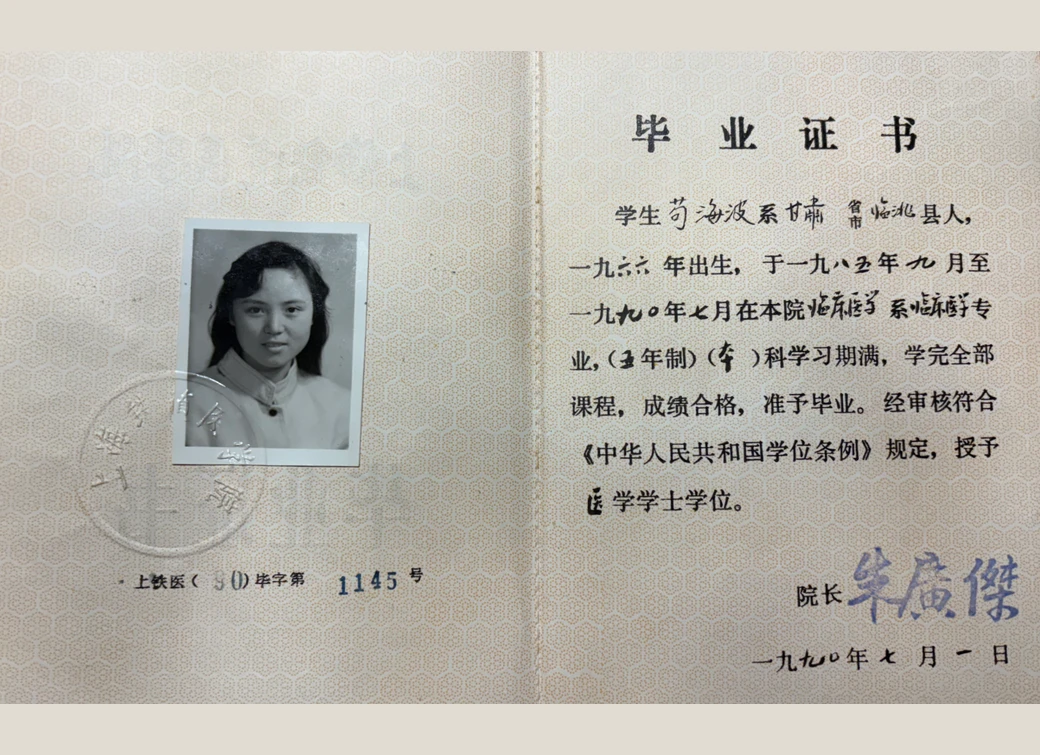
Medical Doctor (OBGYN)Dr. Haibo Guo is a Chinese-trained medical doctor from Linzhao County, Gansu Province. She completed a five-year Bachelor of Medicine at Shanghai Railway Medical College, graduating in July 1990. She received her clinical training in obstetrics and gynaecology.
Your 28-Day Confinement Roadmap
Our team has prepared a carefully crafted progression of soups and teas, designed to support each stage of your journey.
Sheng Hua Tang
生化汤
Si Wu Tang
四物汤
Dang Gui Bu Xue Tang
当归补血汤
Ba Zhen Tang
八珍汤
Shen Ling Bai Zhu San
参苓白术散
Gui Pi Tang
归脾汤
Dan Qi Tang
丹芪汤
Tong Cao Lu Gen Tong Ru Tang
通草芦根通乳汤
Si Shen Tang
四神汤
Shi Quan Da Bu Tang
十全大补汤
Swipe to explore
Our Flagship Product
As Featured In

"Rather than simply packaging traditional recipes, the company develops its herbal soup kits and postpartum teas with input from both licensed Traditional Chinese Medicine practitioners and Western medicine doctors."
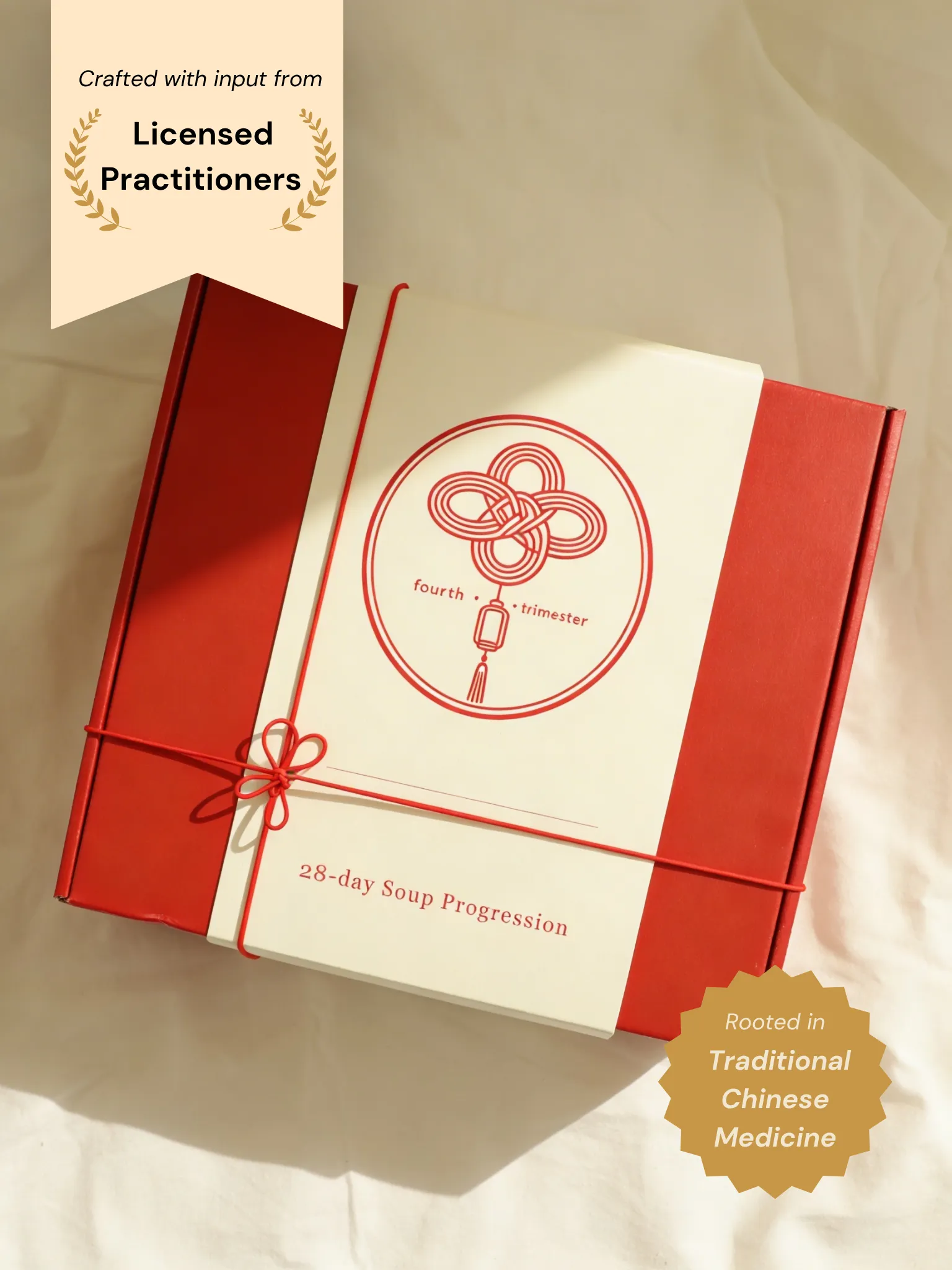
28-Day Soup Progression
28-Day Soup Progression
$427
A complete 28-day postpartum soup program rooted in Traditional Chinese Medicine and the centuries-old practice of zuo yue zi (坐月子) — the "sitting month."
Each box contains 28 individually portioned sachets of pre-mixed dried herbal ingredients — one for each day. Simply simmer in water to prepare a nourishing, warming soup as part of your daily postpartum ritual.
- Traditional Nourishment — Warming soups rooted in Chinese confinement tradition, designed to support rest and recovery after childbirth
- Expert-Reviewed — Formulated with input from licensed TCM and Western-trained practitioners
- Pre-Portioned Daily Program — 28 individually packed sachets with a structured 4-stage progression; just add water and simmer
- 28 individually portioned sachets of dried herbal ingredients
- Follows a 4-stage TCM progression: Clearing, Stabilization, Rebuilding, and Integration
- Expert-reviewed classical TCM formulas adapted for home preparation
Add one sachet to water, bring to a boil, then simmer for 90 minutes. Detailed instructions are included with the product.
- Bai Shao (White Peony Root, 白芍)
- Bai Zhu (White Atractylodes Rhizome, 白术)
- Cao Hong Hua (Safflower Petals, 草红花)
- Chen Pi (Dried Orange Peel, 陈皮)
- Chi Shao (Red Peony Root, 赤芍)
- Chuan Xiong (Ligusticum, 川芎)
- Dang Gui (Angelica Root, 当归)
- Dang Shen (Codonopsis Root, 党参)
- Fu Ling (Poria Cocos, 茯苓)
- Guang Tao Ren (Peach Kernel, 光桃仁)
- Hong Zao (Red Dates, 红枣)
- Huai Shan (Dried Chinese Yam, 淮山)
- Huang Qi (Astragalus Root, 黄芪)
- Lian Zi (Dried Lotus Seeds, 莲子)
- Lu Gen (Phragmites, 芦根)
- Pao Jiang (Roasted Ginger, 炮姜)
- Qian Shi (Euryale Ferox, 芡实)
- Ren Shen (Ginseng, 人参)
- Rou Gui (Cinnamon Bark, 肉桂)
- Sheng Di (Raw Rehmannia, 生地)
- Sheng Gan Cao (Licorice Root, 生甘草)
- Shu Di Huang (Rehmannia Root, 熟地黄)
- Tong Cao (Rice Paper Pith, 通草)
- Zhi Gan Cao (Roasted Licorice Root, 炙甘草)
These statements have not been evaluated by the U.S. Food and Drug Administration. This product is not intended to diagnose, treat, cure, or prevent any disease. If you are pregnant, nursing, or taking prescribed medication, consult your healthcare provider before use. Please always read labels, warnings, and directions provided with the product before use. Review the full Terms & Conditions before making a purchase.
Customer Reviews
Packaging was so nice and product was very easy to use
This is actually exactly what I was looking for!! I’ve been wanting to try more TCM-based products, but never really knew where to start or what to look for. What I especially love is that The Fourth Trimester doesn’t just provide the product I need, but also educates. Just something about knowing what you’re putting in your body and understanding the benefits! Having a structured program laid out in front of me makes things so much easier, and so much less overwhelming. I’ve tried to be more conscious about what I’ve been putting into my body, so I can definitely appreciate the thoughtfulness that’s clearly gone into this! I can’t wait to have all my friends try this too!
From the minute I unwrapped my box, I was blown away! Each package was lovingly/carefully wrapped and the presentation was top notch. The cooking instructions are easy to follow and I love the visual sheet they’ve included to break down what exactly is happening each week. I’ve made my first soup today and am so looking forward to my remaining days. The bad news is I will run out in 27 days but the good news is this was the best purchase ever. Don’t hesitate to do something for yourself after one of the biggest events in your life! Thank you to the fourth trimester team!!
I've just started using these soup kits and I'm really impressed! The instructions are clear and really easy to follow. You just toss the pre-packaged ingredients in a pot with water and let it simmer on the stove for an hour. I was a little nervous going in that it would taste overly herbal or medicinal but it's much milder and more pleasant than I expected. You can tell they aren't skimping on high-quality ingredients (there was saffron in my first batch). Really glad I'm giving this a try!
Everything comes pre-portioned and the directions are easy to follow, which makes it feel much more manageable. Also, it’s reassuring to know the formula is reviewed by both licensed TCM and Western-trained practitioners. That extra thought and care makes the whole experience feel more trustworthy! Super happy with my purchase and will be recommending to all my friends!
I was looking for DIY confinment soups and came across fourth trimester, which didn't disappoint. The soups smell amazing and remind me of the herbal medicines my mom used to give me when I was younger. I also LOVE the way the 28-day soup package looks. It even came with a handwritten note from Alice, the foudner. Did not disappoint!

I bought this as a gift to bring to my friend's baby shower and they loved it! Beautiful packaging and thoughtfully curated ingredients.

Frequently Asked Questions
Chinese Confinement, or 'zuo yue zi' (坐月子), is a richly layered postpartum tradition shaped by Chinese cultural and health practices. It centers on intentional rest, targeted nourishment, and restorative routines designed to help the body recover, rebalance, and regain strength after childbirth.
Confinement is traditionally practiced for about one month. While approaches vary by family and region, the period is often understood as moving from early rest and protection toward gradual rebuilding of strength over the weeks that follow.
The purpose of Confinement is to support a mother's recovery after childbirth through rest, nourishment, and intentional care. Traditionally, this period emphasizes rebuilding strength, restoring balance, and supporting the body as it adapts to the demands of early motherhood. Thoughtful structure and progression can help guide this period.
Confinement traditionally emphasizes warming, nourishing foods chosen to support recovery and replenishment after childbirth. Common ingredients include ginger, red dates, goji berries, and protein-rich foods such as chicken and fish. Soups and teas form the foundation of the diet, providing gentle nourishment and a calming rhythm during the early weeks after birth.
Traditional guidelines suggest limiting 'cooling' foods like raw vegetables, cold drinks, and certain fruits. Spicy, oily, and processed foods are also typically avoided. The goal is to consume easily digestible, warming foods that support nourishment.
Common confinement recipes include pig trotter vinegar soup, sesame oil chicken, fish and papaya soup, red date tea, and longan and goji berry drinks. These dishes are traditionally valued for their warming qualities and nourishing ingredients, and are often prepared as part of a broader rhythm of postpartum care. The Fourth Trimester's products draw inspiration from these time-honored recipes, thoughtfully adapted for modern mothers.
Traditionally, washing hair during Confinement was discouraged out of concern for exposure to cold during recovery. In modern practice, many mothers wash their hair using warm water and dry it thoroughly afterward. Today, Confinement is commonly adapted to personal comfort, while still prioritizing warmth and gentle care.
Traditionally, Confinement encourages staying indoors to rest and recover after childbirth. Today, many mothers adapt this guidance, choosing short outings when they feel ready. The emphasis remains on moving at a slower pace and maintaining a calm daily rhythm that supports recovery.
Yes. Variations of postpartum confinement are practiced across Asia, including in Malaysia, Singapore, Taiwan, Hong Kong, and among Chinese communities worldwide. Similar postpartum traditions also exist in other cultures, such as sanhujori in South Korea and traditional postpartum care practices in India. While the customs differ, many share a common emphasis on rest, nourishment, and gradual postpartum transition.
Yes. While traditional Confinement often involved strict rules shaped by a different time and context, its underlying principles remain relevant. Many modern mothers adapt the practice by prioritizing rest, nourishment, and a gradual return to daily life in ways that align with contemporary routines and personal preferences.
The 40 day rule refers to a widely observed postpartum tradition in which new mothers rest and recover for roughly 40 days after giving birth. While Chinese confinement traditionally centers on 30 days, many cultures around the world—including traditions in the Middle East, Latin America, and South Asia—observe a 40-day postpartum period. The core idea is the same: dedicated time for rest, nourishment, and gradual recovery before resuming daily routines.
Traditionally, visitors were limited during confinement to protect the mother and newborn from illness and to preserve a calm environment for recovery. In modern practice, many families welcome close relatives and friends in small numbers while keeping visits short and low-key. The guiding principle is to prioritize the mother's comfort and rest above social obligations.
Traditional guidelines encourage rest, staying warm, eating nourishing soups and teas, and avoiding cold foods, cold water, and strenuous activity. Common advice includes limiting screen time, sleeping when the baby sleeps, and accepting help from family. While many modern mothers adapt these guidelines to suit their lifestyle, the underlying theme is the same: slow down, nourish yourself, and allow your body time to recover.
Costs vary widely depending on the approach. Hiring a full-time confinement nanny can range from $3,000 to $10,000 or more for a month, while confinement centers may charge $5,000 to $20,000+. A more accessible option is to follow confinement principles at home using pre-prepared confinement soups and teas, which can cost a few hundred dollars for a full 28-day program—making the tradition achievable without the premium price of full-service care.
Yes, all of our products are vegetarian. Each sachet contains only dried herbs, roots, and botanical ingredients. You can review the full ingredient list on the product page. If you have specific allergies or sensitivities, we recommend checking the ingredients carefully before use.